
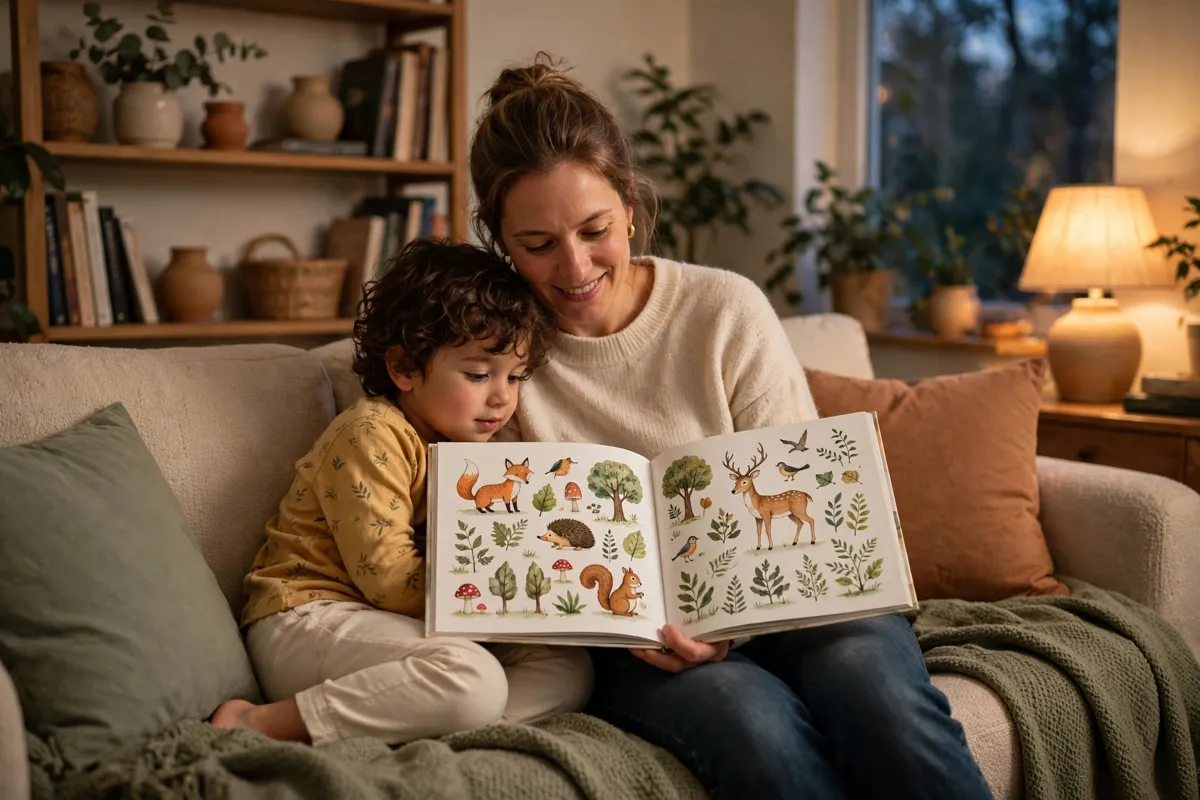
Few habits shape a child’s future as quietly and powerfully as reading aloud to children. It takes no special equipment, no expensive programme and no teaching qualification — just a book, a comfortable spot and a few minutes of your voice. Yet those few minutes, repeated daily, build vocabulary, strengthen focus and plant a love of stories that can last a lifetime.
Many parents stop reading aloud once a child can decode words independently, assuming the job is done. In reality, children benefit from being read to long after they can read alone, because listening skills develop ahead of reading skills. A child who cannot yet tackle a chapter book can still follow its plot, meet its characters and absorb language far richer than anything in their own reading pile. This guide explains why reading aloud to children matters, how to do it well and how to turn it into a daily habit your family actually keeps.
Why Reading Aloud to Children Matters More Than You Think
When you read aloud, your child hears language in its most polished form: complete sentences, varied vocabulary and the natural rhythm of storytelling. Conversation alone rarely offers this richness, because everyday speech is fragmented and repetitive. Books, by contrast, introduce words and ideas children would seldom encounter at the dinner table, from descriptions of distant places to the feelings of characters facing difficult choices.
Reading aloud to children also builds the machinery of learning itself. Following a story trains listening stamina and working memory. Predicting what happens next develops reasoning. Meeting unfamiliar words in context teaches children to infer meaning, a skill that transfers directly to the classroom. Perhaps most importantly, shared reading creates a warm emotional association with books. A child who experiences stories as comfort, laughter and closeness is far more likely to pick up a book alone later — and that motivation underpins everything from school achievement to the study habits they will need as teenagers, such as the self-testing approach described in our guide to active recall and why testing beats highlighting.
The Key Benefits of Reading Aloud to Children
Stronger vocabulary and language skills
Children absorb new words effortlessly when they hear them inside a story that holds their attention. Because picture books and novels use a wider range of words than daily conversation, regular read-aloud time quietly expands the vocabulary your child will draw on when speaking, writing and learning every other subject.
Better focus and listening stamina
Sustaining attention through a whole story is gentle training for the classroom, where children must listen for extended periods. Short daily sessions grow this stamina gradually, especially when combined with calm, screen-free moments such as the simple practices in our article on mindfulness and focused attention in daily activities.
Imagination, empathy and understanding
Stories let children step into other lives. They meet characters who are brave, frightened, kind or unfair, and they rehearse real emotions in a safe place. This perspective-taking supports the social growth explored in our guide to promoting positive behaviour and healthy relationships, and it gives you natural openings to talk about feelings, choices and consequences.
A head start at school
Children who are read to regularly arrive at school familiar with how books work, how stories are structured and how print carries meaning. They tend to find early reading instruction easier to build on, because the foundations — sounds, words, sentences and narrative — are already in place.
How to Read Aloud Well: Practical Tips That Make a Difference
You do not need to be an actor, but a little expression goes a long way. Slow down, use different voices for characters if you enjoy it, and pause before big moments to build anticipation. Let your child interrupt with questions and comments; conversation around the story is where much of the learning happens. Ask what they think a character will do next, why someone behaved as they did, or how the story might end differently.
Let your child choose the book often, even if it means reading a favourite for the twentieth time. Repetition is not wasted time — young children notice new details on every pass and gain confidence from predicting familiar lines. Mix their choices with your own suggestions to stretch their range gradually. And keep reading aloud after your child can read independently: choose books slightly above their solo level so they keep hearing richer language than they can yet manage alone, in the same way that older children benefit when parents keep supporting wider learning at home, as discussed in our piece on teaching children time management skills.
Choosing the Right Books for Every Age
For babies and toddlers, choose sturdy board books with bright pictures, rhythm and repetition. Short sessions are fine — following your child’s attention matters more than finishing the book. Preschoolers enjoy longer picture books with humour, gentle suspense and characters they can relate to, and they love joining in with repeated phrases.
Early readers thrive on a mix: simple books they can attempt themselves, and richer stories you read to them. From around seven upwards, chapter books open new territory. Read series together so the habit has a built-in next step, and do not overlook poetry, comics and non-fiction about your child’s current obsession, whether that is dinosaurs, space or football. For bilingual families, reading in both languages strengthens each one — a point explored further in our article asking whether you can learn multiple languages at once.
Making Reading Aloud a Daily Habit That Sticks
Habits survive when they are attached to something that already happens every day. Bedtime is the classic anchor, but breakfast stories, bath-time books and a quiet ten minutes after school all work. Protect a small, consistent slot rather than aiming for a heroic hour you cannot sustain; fifteen relaxed minutes daily beats an occasional marathon.
Make the environment inviting: a small shelf or basket where books live within reach, a comfortable chair and good light. Keep a book in the car and in your bag for waiting rooms and queues. Most of all, let your child see you reading for pleasure yourself. Children copy what they observe far more than what they are told, and a home where adults read is a home where reading feels normal. Busy parents often worry about finding the time, but the same planning mindset behind balancing study, work and personal life without stress applies here: small, scheduled and non-negotiable beats large and occasional.
Questions Parents Often Ask
What if my child will not sit still? Do not force stillness. Many children listen best while drawing, building or fidgeting, and younger children may wander and return. Keep reading; listening is still happening.
Is it a problem if we miss days? No. Habits bend; they only break when we abandon them entirely. Simply pick the book up again tomorrow without guilt.
Can audiobooks replace reading aloud? Audiobooks are a wonderful supplement, especially on journeys, but they cannot pause for your child’s question, respond to their reaction or share a joke in the moment. Use both, but protect the shared human version where you can.
Reading aloud to children is a small daily act with an unusually long reach. It builds the language, focus and imagination your child will draw on for years, and it gives you something screens never will: a shared world, explored together, one page at a time. Start tonight with a single short book — the habit grows from there.
