
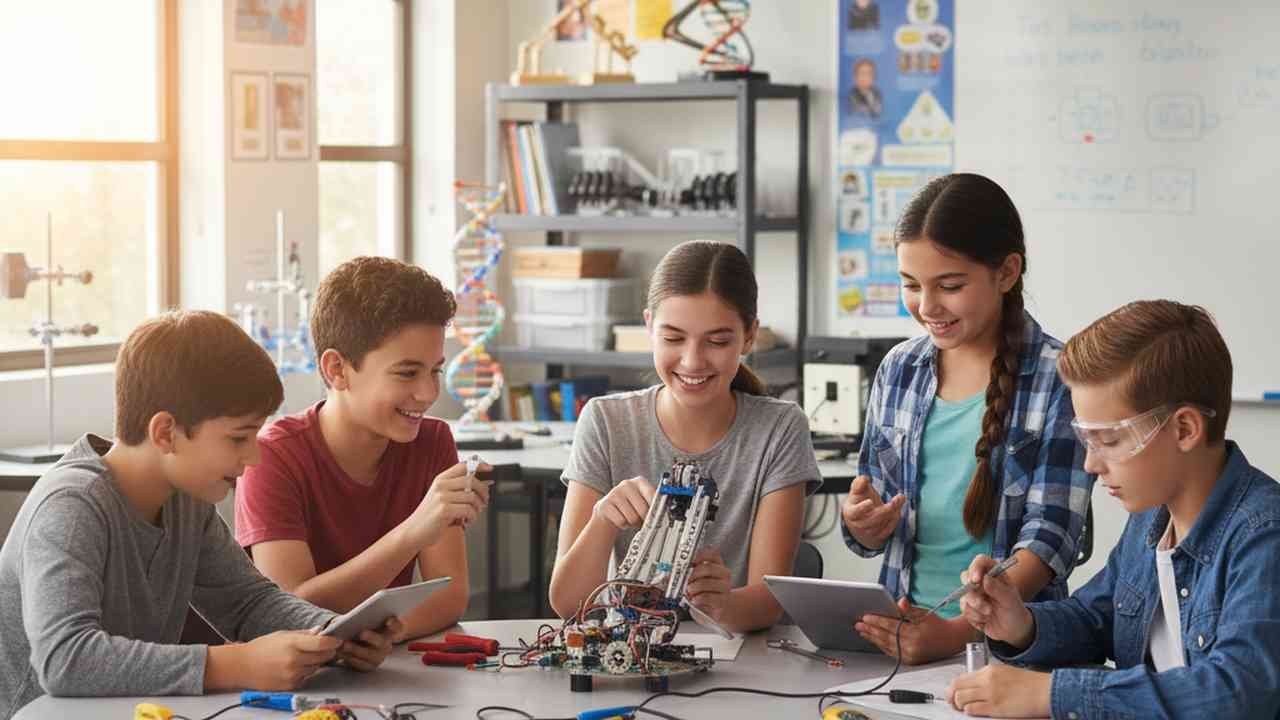
In the fast-evolving landscape of education, where innovation and adaptability are paramount, the fusion of peer collaboration and STEM-based group projects stands as a beacon of transformative learning. This approach not only ignites curiosity but also fosters a deep sense of community and shared purpose among students. At the heart of this educational revolution lies the inclusive education philosophy, a guiding principle that ensures every learner, regardless of background or ability, has access to meaningful learning experiences. Embracing this philosophy within STEM education is not merely a trend but a necessity for cultivating the problem-solvers and innovators of tomorrow.
The Essence of Peer Collaboration in STEM Learning
Imagine a classroom buzzing with energy, where students are not passive recipients of information but active participants in their learning journey. In such an environment, peer collaboration becomes the cornerstone of the educational experience. Through group projects, students engage in dynamic interactions, exchanging ideas, challenging each other’s perspectives, and collectively navigating complex problems. This collaborative process mirrors real-world scenarios, where teamwork and communication are essential for success. The inclusive education philosophy underscores the importance of such collaborative learning, recognizing that diverse perspectives enrich the learning process and lead to more innovative solutions.
Research has consistently shown that collaborative learning enhances critical thinking, problem-solving skills, and academic achievement. When students work together, they are exposed to a variety of viewpoints and approaches, which broadens their understanding and fosters a deeper comprehension of the subject matter. Moreover, collaborative projects often involve hands-on activities that make learning more engaging and memorable. This experiential learning not only solidifies theoretical knowledge but also develops practical skills that are crucial in the modern workforce.
STEM-Based Group Projects: A Gateway to Real-World Problem Solving
STEM-based group projects serve as a powerful tool for bridging the gap between theoretical knowledge and real-world application. These projects challenge students to apply scientific principles, mathematical concepts, and engineering practices to solve tangible problems. Whether it’s designing a sustainable energy solution, developing a mobile application, or constructing a model bridge, STEM projects require students to think critically, collaborate effectively, and innovate continuously.
Integrating the inclusive education philosophy into these projects ensures that all students, regardless of their abilities or backgrounds, can participate meaningfully. By providing diverse roles within the project – such as researcher, designer, coder, or presenter – every student can contribute in ways that align with their strengths and interests. This approach not only promotes inclusivity but also empowers students to take ownership of their learning and recognize the value of their unique contributions.
Fostering an Inclusive Classroom Culture
Creating an inclusive classroom culture goes beyond physical accommodations; it involves cultivating an environment where all students feel valued, respected, and supported. In the context of STEM education, this means designing group projects that are accessible to students with varying abilities and learning styles. It also entails providing the necessary resources, guidance, and encouragement to ensure every student can succeed.
The inclusive education philosophy emphasizes the importance of differentiation in instruction. By tailoring teaching methods and materials to meet the diverse needs of students, educators can create a learning environment that is both challenging and supportive. This might involve using assistive technologies, providing alternative formats for materials, or offering flexible assessment methods. Such strategies not only enhance learning outcomes but also promote a sense of belonging and self-worth among students.
Strategies for Effective Peer Collaboration in STEM Projects
To maximize the benefits of peer collaboration in STEM-based group projects, educators must implement strategies that promote effective teamwork. One such strategy is the assignment of specific roles within the group. By delineating responsibilities – such as project manager, researcher, designer, and communicator – students can focus on their individual tasks while contributing to the collective goal. This structure helps prevent confusion and ensures that all aspects of the project are addressed.
Another effective strategy is the incorporation of regular check-ins and feedback sessions. These meetings allow students to discuss their progress, address challenges, and adjust their strategies as needed. Additionally, providing opportunities for reflection enables students to evaluate their performance and identify areas for improvement. Such practices not only enhance the quality of the project but also develop students’ self-regulation and critical thinking skills.
Overcoming Challenges in Collaborative STEM Learning
While peer collaboration in STEM education offers numerous benefits, it also presents challenges that must be addressed to ensure success. One common challenge is the potential for unequal participation, where some students may dominate the group while others remain passive. To mitigate this, educators can implement strategies such as rotating roles, setting clear expectations for participation, and fostering a culture of respect and inclusivity.
Another challenge is the varying levels of preparedness and skill among students. To address this, educators can provide scaffolding and support to help all students reach their potential. This might include offering additional resources, providing targeted instruction, or pairing students with peers who can offer guidance and mentorship. By proactively addressing these challenges, educators can create a collaborative learning environment where all students can thrive.
The Role of Technology in Enhancing Collaboration
In today’s digital age, technology plays a pivotal role in facilitating peer collaboration in STEM education. Tools such as online collaboration platforms, virtual labs, and digital design software enable students to work together seamlessly, regardless of physical location. These technologies not only enhance communication and coordination but also provide students with access to a wealth of resources and information.
Integrating technology into STEM-based group projects can also introduce students to the tools and practices used in professional STEM fields. For instance, using project management software can teach students about task scheduling and resource allocation, while utilizing coding platforms can enhance their programming skills. By incorporating technology into collaborative projects, educators can prepare students for the demands of the modern workforce and foster a deeper engagement with STEM subjects.
Assessing Collaborative Learning in STEM Projects
Assessing collaborative learning in STEM-based group projects requires a multifaceted approach that considers both individual and group performance. Traditional assessments, such as quizzes and exams, may not fully capture the skills and knowledge gained through collaborative projects. Therefore, educators should employ alternative assessment methods that evaluate aspects such as teamwork, problem-solving, and creativity.
One effective assessment strategy is the use of rubrics that outline specific criteria for evaluating different components of the project. These rubrics can assess areas such as collaboration, innovation, presentation, and technical accuracy. Additionally, self-assessment and peer-assessment tools can provide valuable insights into individual contributions and group dynamics. By employing comprehensive assessment methods, educators can gain a holistic understanding of student learning and provide meaningful feedback to guide future growth.
Preparing Students for Future Careers Through Collaborative STEM Projects
Collaborative STEM-based group projects not only enhance students’ academic skills but also prepare them for future careers in STEM fields. In today’s workforce, employers value skills such as teamwork, communication, problem-solving, and adaptability. By engaging in collaborative projects, students develop these essential skills and gain experience in applying them to real-world challenges.
Moreover, these projects expose students to various STEM disciplines and career paths, helping them make informed decisions about their future endeavors. Whether it’s exploring careers in engineering, computer science, biotechnology, or environmental science, collaborative STEM projects provide students with a glimpse into the diverse opportunities available in the STEM fields. By fostering these experiences, educators can inspire students to pursue careers that align with their interests and strengths.
In conclusion, encouraging peer collaboration through STEM-based group projects is a powerful strategy for promoting inclusive education and preparing students for success in the modern world. By embracing the inclusive education philosophy and implementing effective collaborative practices, educators can create learning environments that are engaging, equitable, and empowering. As we look to the future, it is imperative that we continue to innovate and adapt our educational approaches to meet the diverse needs of all learners, ensuring that every student has the opportunity to thrive and contribute to the global community.
