
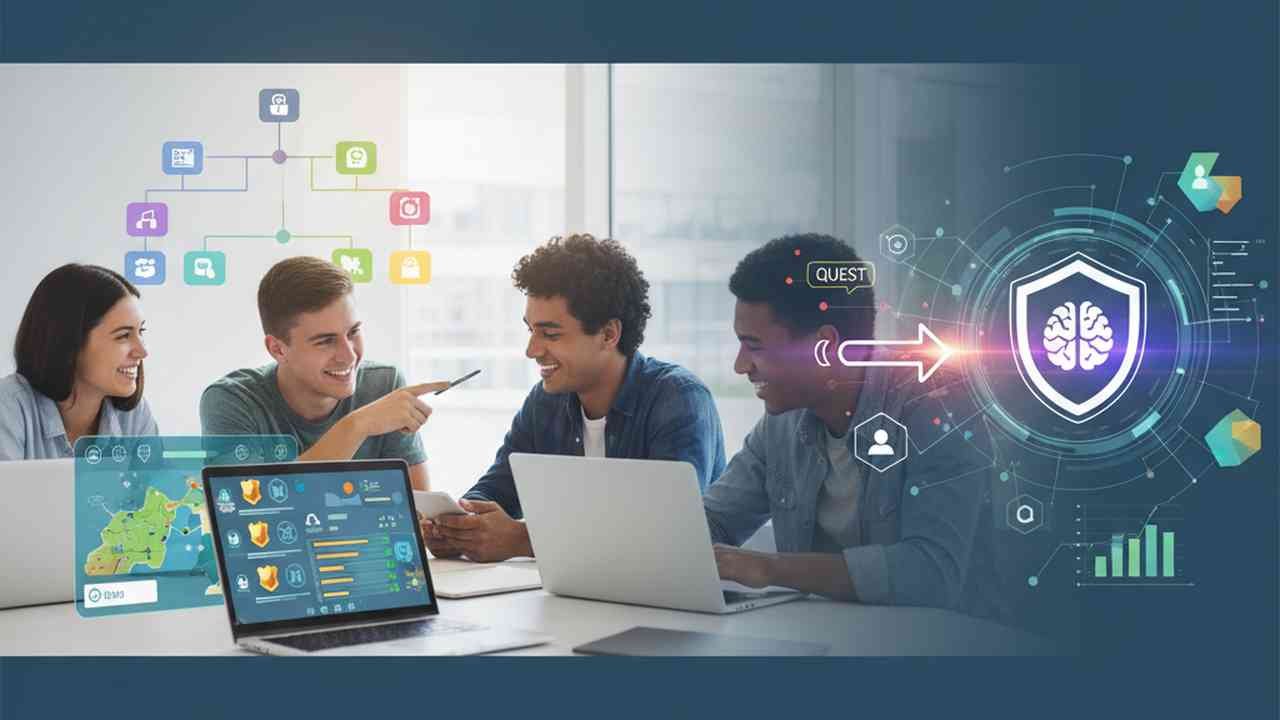
The Power of Gamification in Education
Education is evolving at a breakneck pace, and if you’re not keeping up, you’re already behind. One of the most powerful shifts in the way we approach learning today is the integration of gamification. Picture this: a classroom, whether physical or digital, where students are not just learning – they’re engaging, competing, and unlocking new levels of achievement with each lesson. This isn’t a distant dream; it’s happening right now. Gamification is transforming traditional education into a dynamic, personalized experience that resonates with today’s generation. Imagine an environment where every student’s journey is uniquely crafted to their needs, interests, and pace, all while keeping them motivated through game-like rewards, challenges, and milestones. If you’re not jumping on this bandwagon, you’re missing out on one of the most game-changing developments in modern education. The future of learning is here, and it’s gamified.
Why Traditional Education Systems Are Failing
Let’s face it, the old ways of teaching just aren’t cutting it anymore. Students are disengaged, and test scores are plummeting. We’ve all seen it: rows of bored faces, glazed eyes, and minds drifting elsewhere. Traditional methods often fail to take into account the diverse learning styles, speeds, and interests of students. What works for one may be completely ineffective for another. And while standardized testing continues to dominate, it’s clear that these tests fail to capture the richness of student potential. The results are uninspired students, frustrated teachers, and a massive gap between what’s being taught and what’s truly learned. Now, add the growing demand for personalized learning and you’ve got a recipe for failure unless something major changes. Gamification cuts through all of that, offering a solution that’s as engaging as it is effective.
How Gamification Enhances Personalized Learning
Imagine a student struggling with math – yet, through gamified tools, they are presented with challenges at just the right difficulty, unlocking rewards as they progress. The experience adapts dynamically based on their strengths and weaknesses. Personalized learning is about crafting a tailored experience that recognizes each student as an individual. Gamification achieves this effortlessly. By tracking progress, offering immediate feedback, and adjusting difficulty levels in real time, gamified learning systems give each student what they need, when they need it. It’s as if the lesson itself is custom-designed to match their pace. This approach cuts through the one-size-fits-all method of traditional classrooms, providing a roadmap for every student to succeed, no matter where they start. With these personalized experiences, students no longer feel like they’re falling behind or struggling to keep up – they feel empowered and confident in their learning journey.
The Role of Adaptivity in Gamified Education
But it doesn’t stop there. Gamification doesn’t just personalize the learning experience; it also adapts it in real-time. Imagine a student getting frustrated with a specific lesson. Traditional systems would have them moving on anyway, leaving them behind or, at worst, failing them. But in a gamified learning environment, the system dynamically adapts. It detects when a student is struggling and adjusts the pace or difficulty of the content accordingly. It might present easier tasks to build confidence or offer more advanced challenges when the student is ready for the next level. This adaptivity is the magic behind gamified education, making it so much more than just fun – it’s incredibly effective. With gamified systems, there’s no more one-size-fits-all. The learning experience constantly reshapes itself around the learner’s needs. This adaptation ensures that no student is ever left behind, no matter their starting point, and that they are always moving forward at their optimal pace. The future of education is individualized and adaptive, and those not taking advantage of this tech-driven evolution risk falling behind.
Gamification Sparks Motivation Like Never Before
Let’s be real: motivation is often the biggest barrier to learning. How many times have you watched students struggle to stay engaged with content they find boring or irrelevant? Enter gamification. By turning learning into an interactive game, it taps into the brain’s natural reward system. Points, levels, badges, and achievements become milestones that students actively work toward. This constant cycle of reward and progression is intoxicating. The more students engage, the more they level up, unlocking new challenges and content. It’s an experience that feels less like work and more like an adventure. When you incorporate game mechanics into the learning process, you create an environment where students are excited to come back each day, eager to reach the next level. The sense of urgency is palpable: the next achievement is always within reach. If you’re not bringing this motivation into your educational environment, you’re missing out on an opportunity to unlock full potential.
Real-World Examples of Gamification in Action
Don’t just take our word for it – there are schools and institutions that have already embraced gamification with outstanding results. Take Duolingo, for example, the language-learning app that’s been dominating the market for years. With a game-like structure, Duolingo has successfully engaged millions of users, making language learning feel like an enjoyable, rewarding challenge. Students earn points for completing lessons, level up, and are encouraged to complete daily streaks. The result? Learners are hooked, coming back day after day to improve their skills, while the app adapts to their individual learning needs. Another standout is Classcraft, a platform used by schools to gamify entire classrooms. Students are assigned characters and progress through quests while teachers can assign points, rewards, and challenges based on performance. This level of engagement not only keeps students motivated but also helps them retain information better. These examples clearly show the massive impact that gamification can have, and they’re just the beginning. If you’re not jumping on this bandwagon, you’re risking falling behind as gamified systems continue to prove their worth across the globe.
Gamified Learning: Bridging the Gap Between Learning and Play
There’s a common misconception that learning should always be serious, or that play has no place in the educational world. But gamification blows that myth out of the water. By blending education with game mechanics, students don’t just learn – they play to learn. This balance is the key to maintaining engagement, especially in today’s world where distractions are endless. By making learning feel like a game, students are more likely to engage with content longer, retain information better, and develop a genuine love for learning. Whether it’s competing with friends, earning rewards, or progressing through levels, gamified learning blurs the lines between fun and education in a way that traditional methods simply can’t. It’s a shift that has the potential to make the classroom a place where students are excited to be, eager to learn, and motivated to succeed. And let’s face it – if you’re not embracing this shift, your students are at risk of missing out on an experience that will fuel their passion for learning.
Why You Can’t Afford to Miss Out on Gamification in Education
It’s simple: gamification is no longer a luxury in education; it’s a necessity. Those who fail to adopt this trend risk being left behind as the world moves toward more engaging, effective, and personalized learning experiences. Imagine the students who thrive in gamified environments – what happens to those who are still stuck in traditional classrooms? They’ll continue to struggle with disengagement, underperformance, and lack of motivation. On the other hand, those who embrace gamification will have students who are not only mastering content but are doing so in a way that feels natural, rewarding, and sustainable. As educators, schools, and institutions, you cannot afford to be left behind in a world where innovation is moving so rapidly. The question is no longer “should we gamify?” It’s “can we afford *not* to?” If you’re not exploring how gamification can enhance education today, you risk falling behind as others race ahead.
