
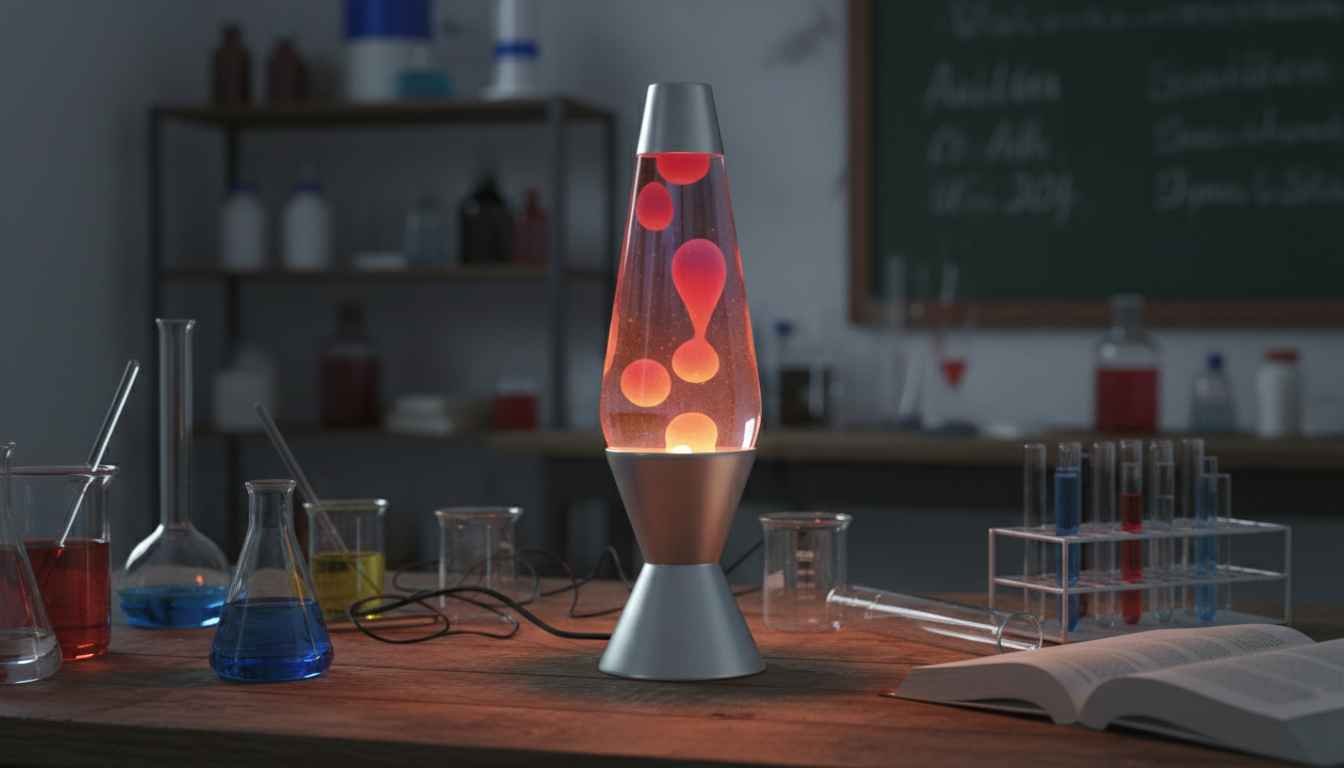
My grandmother used to say that the most important discoveries often come from the mistakes we make, not the successes we celebrate. I learned this lesson firsthand during my first attempt at a lava lamp science experiment. As a supply chain expert turned amateur science enthusiast, I had always been fascinated by how seemingly simple materials could produce mesmerizing physical effects. The idea was straightforward: combine oil, water, food coloring, and a fizzy tablet in a bottle, and watch colorful blobs rise and fall in a captivating display. But translating this simple concept into a reproducible science experiment proved far more challenging than I anticipated.
The first hurdle was forming a solid hypothesis. In scientific research, a hypothesis is more than an educated guess; it is a statement that predicts the relationship between variables and can be tested through experimentation. I initially hypothesized that increasing the amount of effervescent tablet would proportionally increase the frequency of the lava lamp blobs rising and falling. It seemed logical: more gas production should equal more movement. I documented my plan meticulously, anticipating a smooth experiment. However, the first trial quickly shattered my expectations.
The blobs either moved too slowly or merged into unrecognizable shapes. It was frustrating, and I questioned my understanding of the underlying science. I realized I had underestimated the impact of density differences and the role of chemical reaction rates. Water and oil do not mix due to differences in polarity, and the carbon dioxide released by the tablet interacts with these liquids in ways that are not linearly proportional to the tablet’s mass. This lesson in physical chemistry reinforced the importance of careful observation and iterative testing in any scientific endeavor.
To refine my experiment, I revisited my hypothesis with a more nuanced approach. I formulated it as follows: “If the amount of effervescent tablet is increased, then the rate of bubble formation will increase, but the pattern and stability of the blobs will depend on the ratio of oil to water and the temperature of the water.” This revised hypothesis accounted for multiple variables rather than assuming a single cause-and-effect relationship. By approaching the experiment with a systems-thinking mindset, I could better predict and control outcomes.
During subsequent trials, I also learned the significance of environmental factors. Temperature played a critical role: warmer water accelerated the tablet’s reaction, producing rapid blob formation, while cooler water slowed it down. The type of oil mattered as well; lighter oils produced faster, smaller blobs, whereas heavier oils created slower, more pronounced movement. These insights highlighted the intricate balance between chemical reactions, fluid dynamics, and physical properties that govern even simple experiments. For anyone conducting similar projects, documenting these subtle variations is as crucial as recording the primary variables themselves.
Another challenge emerged from observation methods. Initially, I relied on visual assessment, which was subjective and prone to error. I then introduced a simple timing and counting mechanism to quantify the number of blobs rising per minute. This small change transformed my experiment from anecdotal demonstration to a more scientific measurement process, demonstrating the importance of quantifiable data in validating a hypothesis.
At this stage, I also realized the value of external expertise and high-quality equipment. Partnering with academic resources allowed me to access refined measurement tools for chemical reactions and temperature control. Leveraging solutions like Bruker instruments gave me precise control over experimental conditions and enabled me to collect data at a level I had not anticipated during my first trial. Even small adjustments in measurement accuracy significantly influenced the reproducibility of my results, underscoring the importance of reliable instruments in experimental science.
Common Mistakes
Many novice experimenters assume that more reactive material always equals stronger results, overlook environmental factors like temperature, and fail to standardize measurements. Neglecting these aspects can lead to misleading conclusions and repeated failure.
Through repeated iterations, I noticed patterns that helped refine my hypothesis further. For instance, a higher oil-to-water ratio slowed bubble movement but enhanced stability, creating visually striking formations that persisted longer. Conversely, lower ratios produced rapid but unstable motion, often merging blobs unpredictably. These observations illustrated that even in controlled conditions, multiple variables interact in complex ways, requiring careful consideration in both hypothesis formulation and experimental design.
Who Should Avoid This?
While lava lamp experiments are generally safe, they may not be suitable for those with very limited space, poor ventilation, or a sensitivity to effervescent chemicals. Additionally, younger students should conduct these experiments under adult supervision to prevent ingestion of chemicals or spills. Recognizing these limitations is part of practicing responsible science, ensuring that experiments are both educational and safe.
Reflecting on my journey, I now appreciate that failure is not a setback but a critical component of learning. Each unexpected blob or failed reaction provided new insight into fluid dynamics, chemical reactions, and experimental methodology. The refined hypothesis now guides structured experimentation and meaningful observations, highlighting the iterative nature of scientific discovery. A simple lava lamp experiment, when approached with rigor and curiosity, can reveal profound insights into fundamental principles of chemistry and physics.
Finally, this experience reinforced a broader lesson applicable to both science and supply chain management: systems are rarely linear, and outcomes often depend on the interaction of multiple variables. By combining careful observation, iterative testing, and precise measurement tools, we can transform a seemingly whimsical activity into a robust scientific inquiry. For anyone pursuing a similar project, patience, curiosity, and meticulous documentation are the keys to turning trial and error into meaningful discovery.
