
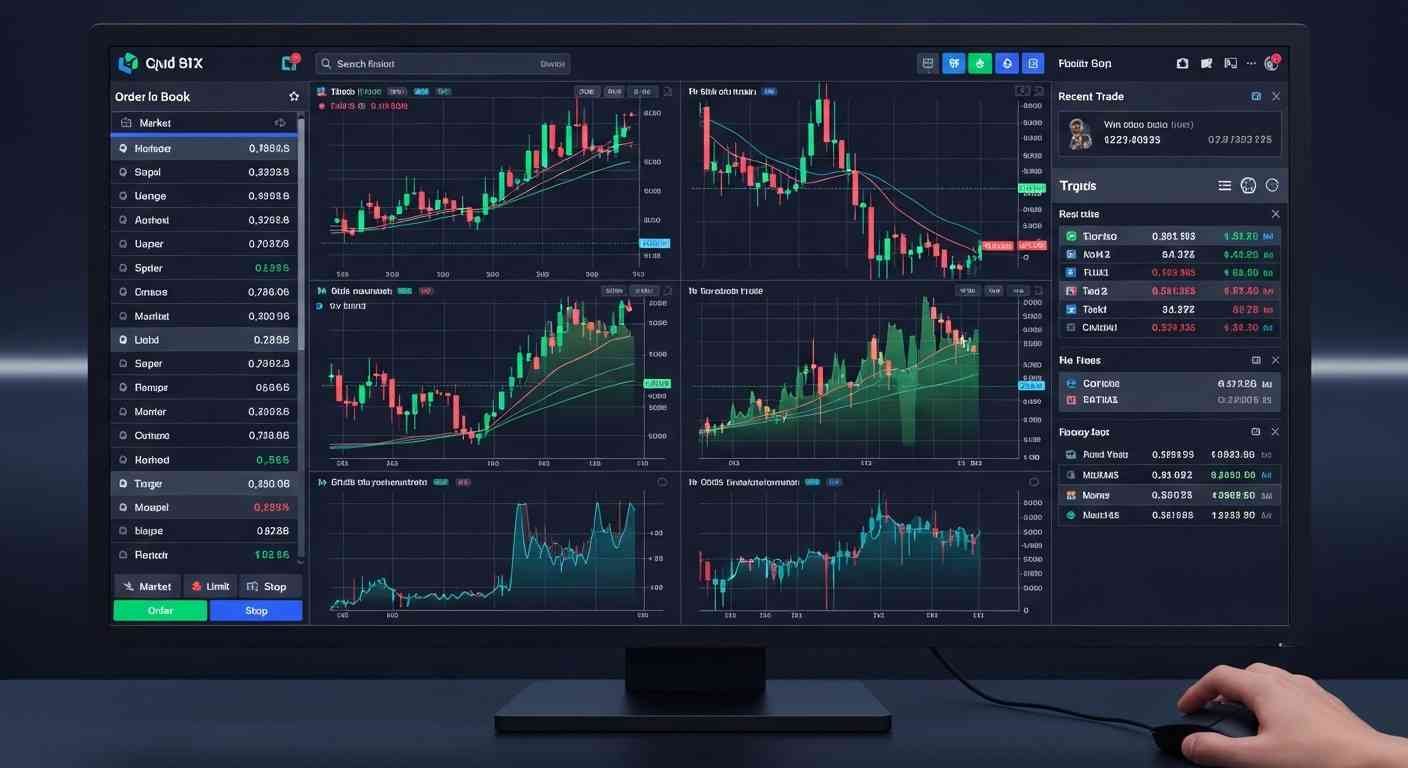
The Market Context
Retail trading has evolved beyond basic charting and order placement, reflecting a broader shift toward professional-grade infrastructure. Platforms are increasingly expected to deliver low-latency execution, deep liquidity pools, and advanced analytics to compete with traditional brokerages. The surge in algorithmic strategies and high-frequency retail tools has reshaped expectations for user interfaces and underlying architecture, forcing providers to rethink scalability and modular design.
Modern traders no longer tolerate opaque trade handling or hidden spreads, demanding transparency in execution mechanics and operational governance. This pressure has catalyzed innovation in cloud-based deployment, multi-asset aggregation, and API-driven customization. Observing these trends, regulators and market participants alike are recalibrating standards to ensure fairness, resilience, and systemic integrity.
In parallel, the proliferation of mobile-first trading habits has elevated the importance of responsive design and real-time analytics. The shift from desktop-centric to multi-device engagement creates new latency and UX considerations, challenging platforms to maintain consistency across hardware and network environments. Strategic differentiation is now tightly linked to both infrastructural robustness and interface intuitiveness.
Regulatory Infrastructure
Licensing regimes vary dramatically across jurisdictions, but common principles include fund segregation, capital adequacy, and operational transparency. Retail platforms must navigate these frameworks while offering consistent functionality to a global audience, which requires sophisticated compliance and audit capabilities. Inadequate regulatory alignment can result in reputational and financial risks that outweigh short-term competitive gains.
Beyond licensing, platform operators are integrating automated reporting, AML monitoring, and risk surveillance into the core system architecture. This proactive compliance infrastructure reduces friction for traders while ensuring adherence to evolving international standards. Firms that embed regulatory intelligence into the platform layer are positioned to scale more safely and respond to inspections or client inquiries with precision.
Segregated accounts and custodian partnerships have become table stakes, particularly when bridging retail and institutional liquidity pools. Such structures ensure that client assets remain insulated from operational failures or counterparty insolvency. Platform design now incorporates regulatory nodes as part of the transaction flow, transforming compliance from a back-office function into an active component of the trading ecosystem.
The Latency Equation
Execution speed remains a critical differentiator for retail platforms, especially as algorithmic and scalping strategies become widespread. Latency is influenced by server architecture, order routing logic, and geographic proximity to liquidity providers, creating a complex optimization problem. Even sub-millisecond differences can materially impact profitability and perceived fairness, placing latency management at the forefront of platform strategy.
Slippage, often underestimated, can erode client confidence when mismatched with real-time market data. Platforms now implement smart order routing, predictive fills, and execution reconciliation to mitigate adverse selection. The interplay between latency reduction and market integrity necessitates continuous monitoring and adaptive infrastructure, particularly under high-volatility conditions.
Cloud-native and hybrid deployment models are emerging as key enablers of ultra-low-latency architecture. By co-locating servers with liquidity venues and leveraging edge computing, platforms can deliver execution speeds previously exclusive to institutional traders. These technical strategies are becoming prerequisites for any provider claiming competitive parity in modern retail markets.
“Institutional-grade execution is no longer exclusive to Wall Street; platforms like Pocket Option platform are bridging the gap for retail traders through low-latency aggregation.”
User Experience Protocols
Effective UX in trading platforms extends beyond aesthetic polish, encompassing workflow optimization, charting depth, and mobile responsiveness. Traders demand immediate access to indicators, customizable dashboards, and seamless transitions between assets without performance degradation. Design decisions now directly influence execution behavior, retention metrics, and client risk management adherence.
Cross-device consistency is critical, as mobile trading accounts for a significant portion of daily activity. Platforms that fail to optimize touch interactions, latency compensation, and data synchronization risk client attrition. Incorporating real-time notifications, intuitive order flow, and historical performance visualization further elevates user trust and engagement.
Charting tools have become strategic differentiators, with multi-timeframe analysis, overlay strategies, and integrated news feeds expected as standard features. UX protocols are evolving toward modular, API-compatible components, allowing professional traders to replicate desktop-grade capabilities on mobile or tablet devices. Platforms that successfully marry design flexibility with operational efficiency gain a tangible competitive advantage.
Risk Management Features
Retail platforms are increasingly incorporating systemic risk controls such as negative balance protection and dynamic stop-loss functionality. These mechanisms safeguard traders while preserving market integrity, ensuring that volatility spikes do not generate catastrophic losses. Risk frameworks are no longer reactive; they are embedded within the execution and reporting layers to provide continuous oversight.
Advanced margin calculations and automated liquidation protocols are becoming standard, reducing operational errors and improving capital efficiency. Platforms are also integrating scenario-based simulations and stress-testing modules to anticipate extreme market events. By embedding these features into the core trading environment, operators align client protection with sustainable platform performance.
Transparency in risk management fosters trader confidence and informs behavioral adjustments. Clear communication of margin requirements, exposure limits, and stop-loss implications reduces systemic shocks and supports informed decision-making. The alignment of UX, infrastructure, and risk oversight constitutes a critical frontier for trading platform evolution.
Trader Personality vs Platform Fit
Understanding the intersection of trader behavior and platform capability is increasingly strategic. Risk tolerance, trading frequency, and preferred asset classes influence the optimal platform configuration. A structured matrix mapping these variables against latency, liquidity, and analytical depth can guide both platform developers and end-users toward mutually beneficial outcomes.
This matrix serves as a decision-making tool, highlighting gaps between trader expectations and platform delivery. Behavioral segmentation allows operators to prioritize feature sets, optimize onboarding, and reduce friction across user cohorts. Integrating feedback loops from this matrix into iterative design cycles accelerates adoption and retention.
By quantifying platform fit against trader archetypes, firms can tailor educational resources, interface complexity, and execution tools to specific audiences. The strategic insight gained from these assessments supports targeted infrastructure investments and product differentiation in a highly competitive market.
Future Outlook
Looking toward 2026, AI-driven analytics and automation will reshape retail trading expectations. Predictive algorithms, sentiment analysis, and automated order execution promise to augment human decision-making, but also raise regulatory and ethical considerations. Platforms that embed machine learning into both UX and backend infrastructure will gain a competitive edge by offering proactive insights without compromising operational integrity.
Automation will increasingly manage risk, monitor latency, and optimize order routing in real time. The convergence of AI, cloud scalability, and modular design creates an environment where retail traders can access institutional-grade tools. Strategic adoption of these technologies will differentiate platforms capable of sustaining growth amidst heightened competition and regulatory scrutiny.
Ultimately, trading platform evolution will hinge on balancing human insight with technological precision. Firms that invest in adaptive interfaces, robust risk frameworks, and transparent execution mechanics are positioned to lead the next wave of retail market innovation. The synthesis of UX, infrastructure, and predictive intelligence will define industry standards in the years ahead.
