
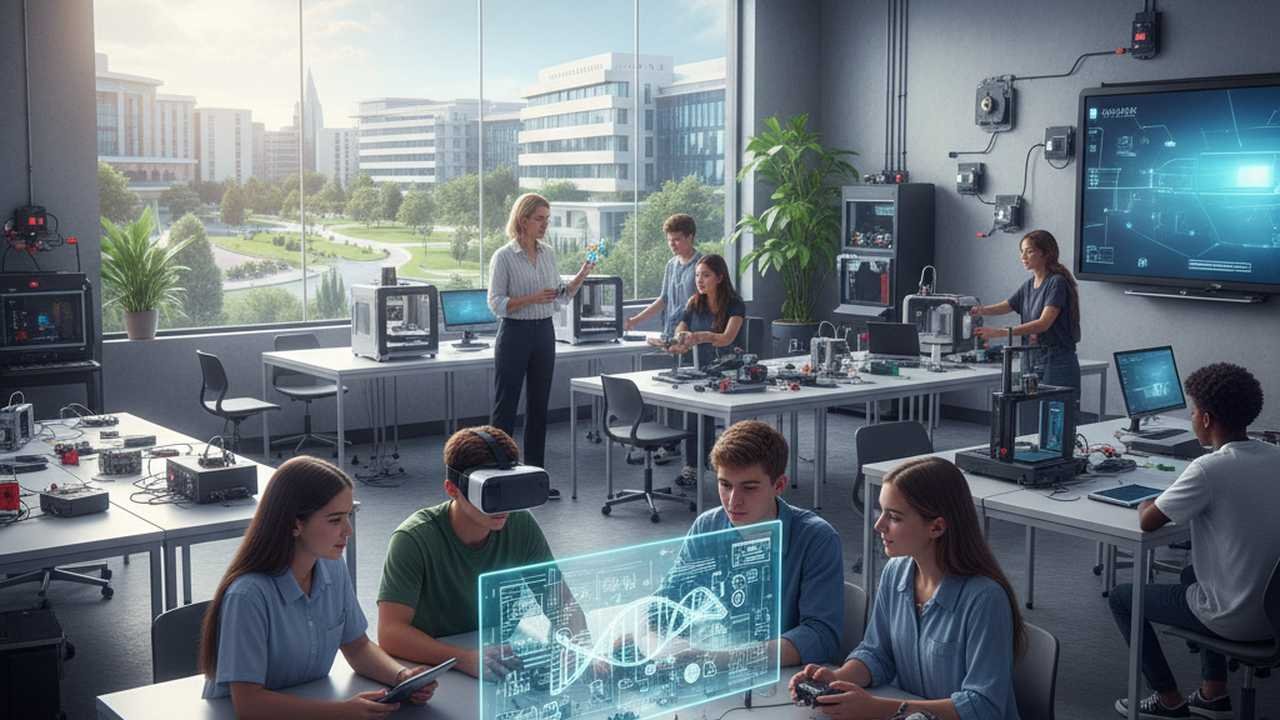
The Urgent Need for Innovation in STEM Education
In today’s rapidly evolving world, the demand for skilled professionals in Science, Technology, Engineering, and Mathematics (STEM) fields has reached unprecedented heights. Yet, traditional educational methods often fail to ignite the creativity and innovation necessary to meet these demands. The integration of technology into STEM education is no longer optional; it’s imperative. Institutions that hesitate to adopt technological advancements risk falling behind, leaving their students ill-prepared for the challenges of the future. The urgency to innovate is palpable, and the window of opportunity is narrowing.
Technology as a Catalyst for Creative Thinking
Technology serves as a powerful catalyst for creativity in STEM education. Tools like coding platforms, robotics kits, and digital design software enable students to transform abstract concepts into tangible creations. This hands-on approach not only deepens understanding but also fosters a mindset of innovation. For instance, students programming a robot to solve a complex problem are not just learning to code; they are engaging in critical thinking, problem-solving, and iterative design processes. These experiences cultivate a creative confidence that traditional teaching methods often overlook.
Immersive Technologies: The Future of STEM Learning
Immersive technologies such as Virtual Reality (VR) and Augmented Reality (AR) are revolutionizing STEM education by providing students with interactive and engaging learning experiences. Imagine exploring the human circulatory system in 3D or conducting virtual chemistry experiments without the constraints of a physical lab. These technologies break down geographical and financial barriers, offering students from diverse backgrounds access to high-quality educational experiences. The integration of VR and AR into STEM curricula is not just a trend; it’s the future of learning.
The Role of Artificial Intelligence in Personalized Learning
Artificial Intelligence (AI) is transforming STEM education by enabling personalized learning experiences. AI-powered platforms can assess individual student needs, adapt content accordingly, and provide real-time feedback, ensuring that each learner progresses at their own pace. This personalized approach addresses the diverse learning styles and speeds of students, enhancing engagement and retention. Moreover, AI tools can assist educators in identifying areas where students struggle, allowing for timely interventions and support. The adoption of AI in STEM education is not just enhancing learning; it’s making it more equitable and effective.
Collaborative Platforms: Enhancing Team-Based Learning
Collaboration is at the heart of innovation, and technology facilitates this by providing platforms that enable seamless teamwork among students. Tools like cloud-based document editors, project management software, and communication platforms allow students to work together in real-time, regardless of their physical locations. These collaborative platforms mirror the teamwork environments found in professional STEM fields, preparing students for the collaborative nature of modern workplaces. By fostering collaboration, technology is not only enhancing learning but also building essential skills for future careers.
Bridging the Gap: Access to Technology in Underserved Communities
While technology has the potential to transform STEM education, access remains a significant barrier, especially in underserved communities. Initiatives aimed at providing technology resources to schools in rural and low-income areas are crucial in bridging this gap. Programs that supply schools with computers, internet access, and training for educators empower students in these communities to engage with STEM subjects effectively. Ensuring equitable access to technology is essential in creating a level playing field where all students have the opportunity to succeed in STEM education.
Financial Support: Enabling Technological Integration in Education
Integrating technology into STEM education requires substantial financial investment. Higher education finance plays a pivotal role in this integration, providing the necessary funds for purchasing equipment, training educators, and developing digital curricula. However, securing funding can be challenging, particularly for institutions with limited budgets. Partnerships with private sector companies, government grants, and philanthropic organizations can provide the financial support needed. For example, initiatives like Google’s $1 billion commitment to AI training and tools for U.S. higher education institutions illustrate the potential of such partnerships in advancing technological integration in education. Institutions must actively seek and leverage these financial resources to stay competitive and innovative.
Real-World Applications: Preparing Students for the Workforce
One of the most compelling reasons to integrate technology into STEM education is its ability to prepare students for real-world applications. Through project-based learning, students can work on solving actual problems faced by industries, such as developing sustainable energy solutions or creating software applications to address societal issues. These experiences not only enhance technical skills but also cultivate critical thinking, creativity, and problem-solving abilities. Employers increasingly seek candidates who can apply their knowledge to real-world challenges, making such educational experiences invaluable in preparing students for the workforce.
The Consequences of Inaction
Failing to embrace technology in STEM education has far-reaching consequences. Students educated through outdated methods may find themselves ill-prepared for the demands of modern workplaces, leading to a workforce lacking in innovation and adaptability. Moreover, institutions that do not integrate technology risk losing their relevance, as prospective students gravitate towards schools that offer cutting-edge educational experiences. The competitive landscape of education is shifting, and institutions must act swiftly to incorporate technology into their STEM programs or risk obsolescence.
Conclusion: A Call to Action
The integration of technology into STEM education is not just an enhancement; it’s a necessity. The rapid pace of technological advancement demands that educational institutions adapt swiftly to prepare students for the future. By embracing technology, educators can foster creativity, innovation, and critical thinking in students, equipping them with the skills needed to thrive in a technology-driven world. The time to act is now. Institutions must invest in technology, seek financial support, and implement innovative teaching methods to ensure that their students are not only consumers of technology but also creators and innovators. The future of STEM education depends on the actions taken today.
If you want to explore innovative methods to enhance student leadership, consider how the ghana education system integrates STEM-based challenges to foster essential skills.
